Twisted Into Form Interview!
Tuesday, 15 July 2008
Chuy: Hey Kaj, it’s a real honor for me and the PerfectProg people to ask you some questions, thank you so much for your time and availability.
1. Which is the History of Twisted into Form? Why this name?
Kaj: The roots of the band stretch back to the year 2000, when Erik Aadland and I started talking about getting together to play around with ideas we both had. At this point none of us were in any other bands – Erik had recently quit Lunaris, where he was involved for awhile, and I had left Spiral Architect almost two years before – but we had known each other for years and thought it would be interesting to see where it might lead us.
For a long time we just got together now and then, talking about music, maybe playing for a couple of hours, but as we progressed, the ideas seemed to demand to be taken more seriously. That’s when David came on board. While continuing as a full-time member of Extol, I think he was intrigued by the challenge of doing something very different, and as we all got along very well we just kept going. Leif got involved because I asked him to... Well, the truth is that through the years I’ve always turned to Leif when I’ve been in desperate need of a vocalist, and this goes all the way back to the late eighties, when he was first introduced to me through a friend. He helped us out on the very first serious recording I took part in, which was years prior to the work he did on the Spiral demo, and ever since I’ve just enjoyed working with him.
We spent a long time trying to find a name that we felt would fit our music, and when Erik suggested "Twisted into Form" it just snapped into place right away. We did of course discuss the connection to Forbidden, and we knew it would be commented, but since we all felt that we were pretty far off from Forbidden musically, we assumed it wouldn’t be a problem once people got a chance to hear our music. Only time will tell, I guess, but I’m still happy with the name – it is how we make our music, after all...
2. Please tell us about your musical influences.
Kaj: I can find inspiration in almost any kind of music, as long as I think it is well done, and I listen to everything from metal to rock to pop to world music - well, you get the idea... When I first started playing guitar, which is now a lot of years ago, my main inspiration came from good old heavy and metal bands like Kiss, Iron Maiden, Deep Purple, Zeppelin and Black Sabbath. Some of those bands are still among my favourites to this day – I still love Burn, Sabbath Bloody Sabbath and all those albums! Later I got more into the progressive metal scene, mainly through bands like Queensrÿche, Fates Warning, Psychotic Waltz and Dream Theater, and as you can probably hear from the album, that's more or less where I ended up musically as well, but not without a certain death metal influence from the likes of Death and Cynic. I really love the combination of intricate, yet very heavy music, and few bands can match the two last ones there. And I can't get around what is maybe – probably – the band that has had the greatest influence on me as a guitarist, which is definitely Metallica. You might not hear it directly in our music, but I grew up playing every riff James Hetfield made up to and including "The Black Album", and most of my basic guitar skills stem from that time. I've always been more of a rhythm guitarist than a solo guitarist; I guess I have to blame Mr. Hetfield for that, too!
On the other hand, I am a sucker for good melodies, and most of those I find outside of the metal genre. a-ha is in many ways a source of inspiration for me, as is Norwegian artists Anja Garbarek (daughter of jazz musician Jan Garbarek) and Bel Canto. I am also a big fan of Spanish flamenco, mainly artists like Vicente Amigo, Niña Pastori, Paco De Lucia – and Al di Meola, of course, even though he is not strictly flamenco. Or Spanish for that matter. In fact, world music of all sorts has given me lots of inspiration, and some of that music finds it way into my own writing, slightly modified. It gives our music an extra layer of textures that I find exciting, and hopefully it makes it a richer experience for the listener as well.
3. Musically you maintain a sound alike Spiral Architect, great work, are you working in new material?
Kaj: Thank you! First of all: The fact that there are similarities between Twisted into Form and Spiral Architect is simply because even though they are two separate bands, I am the same person; I wrote music in Spiral and I write music in Twisted into Form, so it's only natural that the final results share some common ground. We never sat out to sound like anything in particular, but my way of playing is pretty idiosyncratic (or weird, depending on who you ask...) and therefore recognizable...
As for new material, we have been going very slowly since the album came out, but I do have some new stuff that I am planning to work on this summer. Our situation is a little complicated right now since I'm living in Portugal while all the other guys are still in Norway. This makes rehearsals impossible, but does not mean that we can't write more music – it just has to be done differently. It's too early to say what it will sound like, though.
4. Please talk to us about Then Comes Affliction to Awaken the Dreamer.
Kaj: First of all: “Then Comes Affliction to Awaken the Dreamer” is a quote from the Danish philosopher Søren Kierkegaard (1813-1855). For me this title is a summing up of the whole album: How can we continue to dream about whatever we as individuals will dream about, when we are so constantly reminded of the misery that surrounds us?
The album itself took a long time to record, mostly because we had almost unlimited time in the studio. When you are free to experiment and test any and all ideas you can think of, without having to worry about budgets and economy, it is very easy to spend a lot of time in the studio, believe me! But the nice thing about making music as you go along is that the album sounds fresh even to us; normally a band will rehearse the music almost to death before beginning to record, and by the time the record is finally released, they'll be so fed up with the whole thing that they won't even listen to it for months...
We also had to go back twice to record extra material after we thought we were finished, with me flying back and forth between Oslo and Lisbon, which added quite a lot of time to the total. This was a result of Sensory asking for some additional music when we signed with them, which, for us, led to a new way of writing. Normally, Eric and I would work out the music together, based on ideas we both brought to the table; we'd play around with it and work off each other until we were happy with the structure and the feeling of each song, then arrange them further with David. But the last two we had to do with us being a couple of thousand kilometers apart, so we each wrote one song, sending the drafts back and forth and programming click tracks so that David could record the drums by himself, before we came in and laid down the rest.
There's one song in particular that I think is worth mentioning, which is "Erased". It is quite different from the other songs on the album, and one of the reasons for this is the way we wrote it – or didn't write it, actually... While we were recording the original drum tracks, we asked David to improvise three-four minutes worth of drums, which we recorded. The idea was to write the rest of the music on top of his drums once we started recording our instruments, and although it was a lot of work trying to figure out how to make it sound like an actual song, I really think it turned out to be one of the coolest pieces on the entire album! Well, it just goes to show that there are more than one way of doing things, doesn't it?
We didn't have a lot of restrictions or guidelines for the album, but we wanted it to sound as organic as possible, as opposed to a lot of today's metal which is very heavily produced and somewhat clinical. Personally, I find overly produced music will often loose some of its... well, call it authenticity or whatever you like, but you get the idea. (I still think Dream Theater's "When Dream and Day Unite" is their best album by far; even though the sound is not that good, the music is fantastic! Same goes for "Focus" by Cynic - an amazing album.) We were looking for a sound that was not too polished, we wanted the album to breathe, and I think Neil Kernon did a wonderful job with the mix. We're pretty pleased, anyway...
5. How’s has been the reaction about the album from the metal sites and the metal listeners?
Kaj: It's been pretty amazing, actually; almost all of the reviews and the feedback have been incredibly positive and we are truly grateful for the response. When you spend as much time as we did in the studio putting together the album, it's easy to loose track of whether it sounds good or not, so it is very gratifying to receive such rave reviews, both from metal sites and people in general.
6. What about the side projects of some of the members of TIF?
Kaj: Well, there are quite a few, actually, but most of them are David's. He is an extremely active drummer and has kept very busy for a long time; his main focus is and has always been the thrash/death/black metal band Extol (they have gone through a lot of different styles on their albums, so it's rather difficult to describe their music). Last thing I heard they were taking a break, but they will probably start up again in the near future. David's is also active in bands like Absurd2, Lengsel, Aperture and P&T.
Leif has another band, too, called Sims, which is more of a modern rock band, and I think they started playing together again not so long ago, after having been on a break for a few years.
Erik is currently working on his thesis, so he is quite occupied and currently does not have any other projects.
As for myself, I suddenly found myself playing bass for a Portuguese metal band called Mons Lvnae (or Lunae, they write it the Latin way), which has been a lot of fun. They are friends of mine and were in need of a bass player on very short notice, and I said I could try to help them out if they didn't find anyone else. It seems they didn't... Since I've never played bass before it's been a bit of a challenge, but it's nice just to get out to play a bit once in a while. Additionally, I've been doing some theatre work as well, as a guitarist, which has been, well - different...
7. Are there some tour dates or gigs this year?
Kaj: No, Twisted into Form is, at least for now, not a touring band at all, in fact, we've never even played live... This has a lot to do with what I said earlier, about us living in different countries at the moment, but I certainly hope we'll get the chance to play concerts at some point.
8. Please tell us about the cover of the album, which is the meaning?
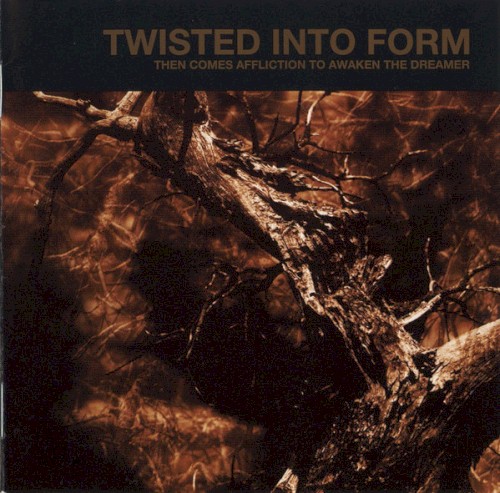
Kaj: Well, there is no explicitly defined meaning to the album artwork, but we do feel that it captures the essence of both the band and the contents of the album. It took us a long time to get there, though, and I think we drove our designer, Samuel Durling, to the brink of madness throughout the process! He came up with a lot of great ideas, and we kept saying "Yeah, that's really cool, but couldn't you maybe just..?". We were looking for something that was not a typical metal cover, but still retained some of the feeling of the music while simultaneously referencing the band's name and the lyrical tone of the entire album. The final result captures all of this, I think – it's twisted, bleak and beautiful at the same time...
9. From where emerges the inspiration to create the music and write the lyrics?
Kaj: From everywhere and anywhere, I guess; as far as content go I write about life as I see it, which I suppose explains the note of hopelessness which is always present on the album. I find it frustrating to live in a world that should have been so utterly fabulous, but is, for most people, quite the opposite. And it saddens me to see how we treat each other – and our surroundings. The fact that I personally, and most of my friends and family for that matter, live very happy, very lucky lives, does not change these facts, and whether I like it or not, this is reflected in what I write. As I get older, I’ve also become less bombastic in my writing, and more emotional, I think, and the ways of the world – or rather our way in this world – just gets me more and more these days.
Style-wise, I get a lot of inspiration from other people, other writers. One of my biggest influences lyrically, even if it’s probably not noticeable, is Fish from his Marillion-days; he has a way with words that is awe-inspiring and a complete domination of the language he uses. Unfortunately I cannot come close to such brilliance – English is not my native language and therefore a lot of the subtle nuances will inevitably escape me. Not that I come close even in Norwegian, of course... But my point is that I am among those who find the lyrics to be just as important as the music, and I want them to stand up to scrutiny on their own as well as giving the music that extra dimension. Choosing the right words is absolutely crucial! As in life, so in music – hehe.
The music itself is inspired by some of the same things - other bands and musicians, of course, but also situations and snapshots of life and things that happen, whether to me or just something or someone that I observe... But mostly the music is a lot of hard work, I think, and I tend to write it one small piece at the time, like a puzzle, preferably with some input from Erik along the way.
10. Kaj, magnificent technique, how you get prepared musically?
Kaj: Hehe, I don't know about that technique! I'm actually a very lazy guitarist (and person all around, I guess...) and I almost never get around to really practise my technique, which is something that I very often regret when I try to play the stuff that I make. I often go long periods not playing at all, which is not a very clever way of improving oneself, I'm afraid... Mostly I will prepare while writing and recording my ideas, enough to get them down so I can remember them, but rarely to the point of playing them well. I do go through periods were I am a bit more focused, trying to do scales, using a metronome and so forth, which I know is the way to go to improve any kind of technique, but I never manage to stick with it for long, unfortunately. Which, by the way, quite often pisses me off! I'm mostly self-taught and full of idiosyncrasies and bad habits when it comes to playing, and I really wish I was a bit more structured; because of my on/off practising, my technique is rather sloppy, and it means I have to work a lot harder when we are recording stuff. I've never been a particularly skilled guitarist, but what I do have is a pretty good ear for somewhat weird, but still interesting melodies, harmonies and rhythms, which hopefully can compensate for my lack of study. But take heed, all you budding guitarists out there: Practise those scales, that's the only way to avoid breaking your neck - or your wrists - in the studio and on stage!
11. This is a forced question, what happen with Spiral Architect? Why did this awesome band disappear ?
Kaj: Well, they haven't actually disappeared, even though it certainly seems that way... All the guys in Spiral Architect have been extremely busy with a lot of side projects, which has taken up most of their time. Lars and Steinar have been touring with Satyricon for several years (Steinar still is, Lars quit not too long ago), and the two of them also have a technical black metal band going called System:Obscure. Asgeir has been the permanent drummer in Borknagar for years (but recently quit the band), as well as playing on Ishahn's two studio albums, he has toured with Testament, and he plays drums in Vintersorg, too. To name but a few of his projects... Also, he built his own studio, which is where Twisted into Form recorded most of the album, and he has been producing (and playing drums for) a lot of bands there. Unfortunately he has now sold it again, which probably will delay the Spiral album even more, since they were planning to record it there... But for all Spiral Architect fans out there, I'm quite sure that there will be a new album one day. As far as I know, most of it is already written, they just need to find the time to rehearse and record it.
12. There’s something that you want to say to your fans or share with us?
Kaj: It seems I've already said quite a lot, doesn't it, but we're grateful for all the positive feedback we've received, so thanks to everyone who has bought the album or sent us messages these past couple of years! Also, "Then Comes Affliction to Awaken the Dreamer" might take some getting used to, so I hope people listen to it a few times before making up their minds - it might just grow on you...
Kaj, if you want to add a question or something else, please feel free.
Thank you so much Kaj for your words, I appreciate so much, greetings!!!
Chuy Monjarás
Administrator and Webmaster
PerfectProg.Com
Comments